
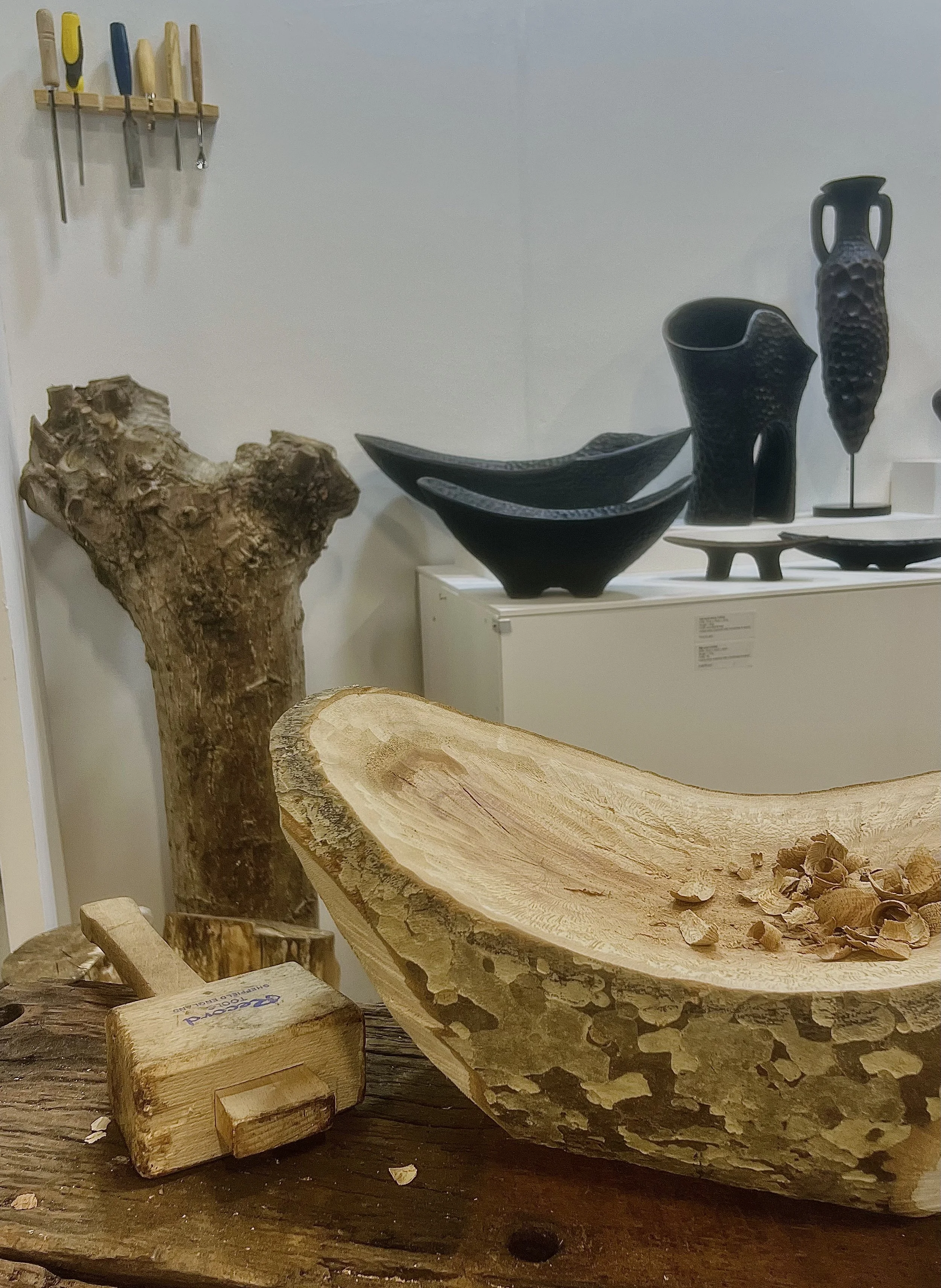
Matt Kavanagh’s Coordinates collection takes shape live at Decorex 2026
I left this year’s Decorex International with a head full of ideas and inspiration, for both work and, of course, the never‑ending project that is my own home.
The highlight was a panel talk on building and sustaining luxury brands, with perspectives from Frederick Fischer (Lalique), Ben Saltmer (Bentley Motors) and Tim Butcher (Fromental), moderated by Annie White El Hachem (OLISE Magazine). I can’t think of a more qualified group to speak to this topic.
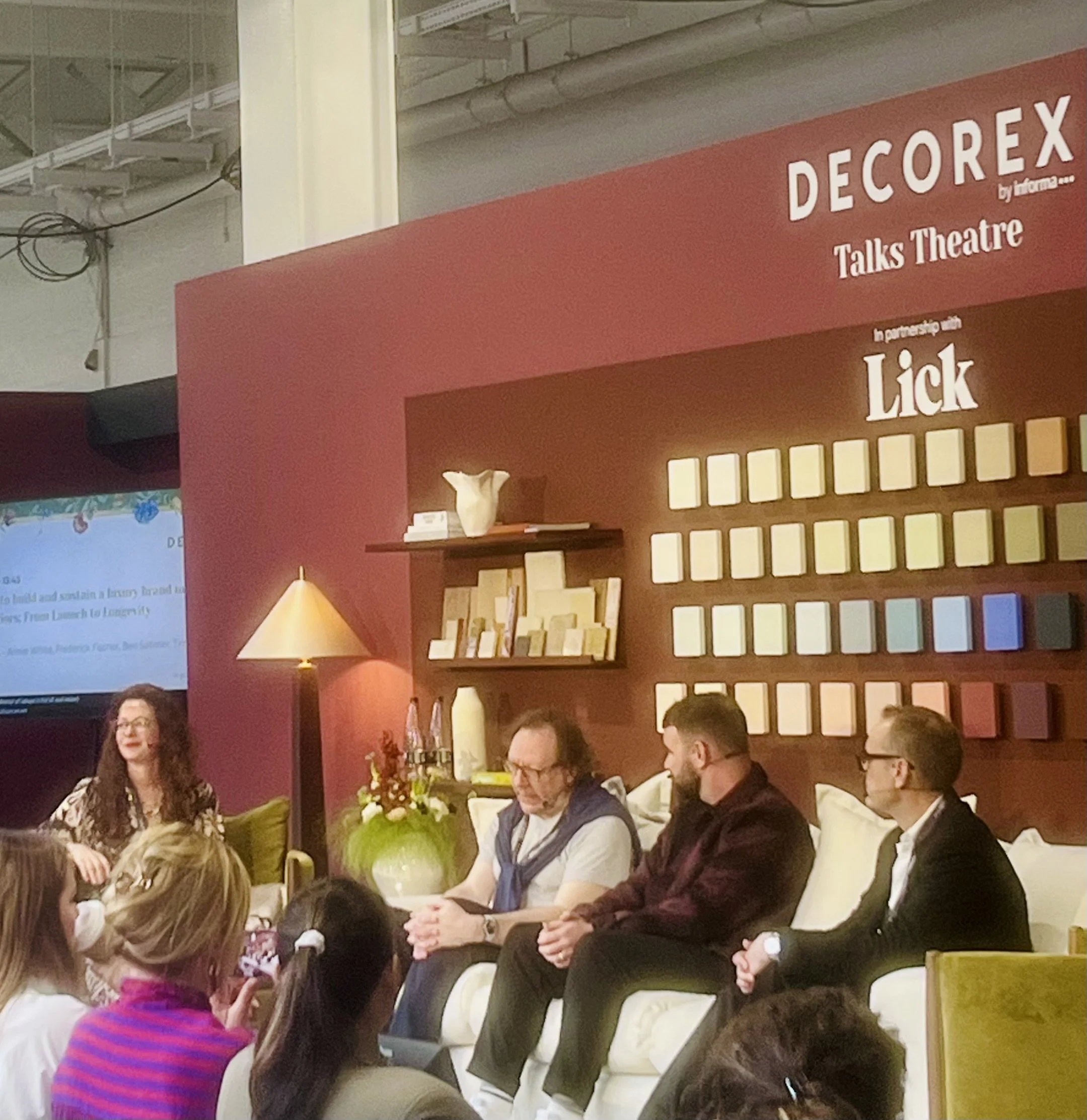
Panel speaking at the Decorex 2026 talks theatre
As I sat there, scribbling notes, my thoughts kept going to… of all things… the laundry. Because it occurred to me that premium brands come with an invisible care label, and they need to be handled accordingly. Treat them like everything else in the wash and, just like your favourite cashmere sweater, they can be damaged in ways that are hard to undo.
Luxury requires an excess of attention, far beyond what efficiency allows. It demands that you handle with care.
Craftsmanship is care
One of the most clarifying takeaways from the panel was this: true luxury is craftsmanship. Craftsmanship is, by its very nature, an act of care - one that reaches far deeper than a polished surface or a prestigious logo.
Craft is skill you can feel in the details, earned through the time it takes to make something properly. It demands restraint and the confidence to say ‘not yet’ when the rest of the world is demanding ‘quicker’ and ‘easier’.
This is why luxury has so much to teach us about building and sustaining a brand, especially in an AI world. The default setting of modern marketing is relentless efficiency. The prevailing logic assumes a straight line where doing more automatically leads to selling more.
The problem is that when AI-assisted efficiency makes rampant content production and growth virtually free, speed stops setting you apart and we all join in the race towards sameness.
Luxury, however, is anchored in what Tim Butcher called an “excess of attention”; with value judged on time taken, not time saved. True craft is deliberately inefficient.
Customers have an increasingly well-honed radar for shortcuts. They feel when an interaction has been templated or rushed. They notice immediately when a brand speaks the language of premium care, but the product or service fails to match the promise.
When the entire market is focused on speed, care becomes your greatest advantage.
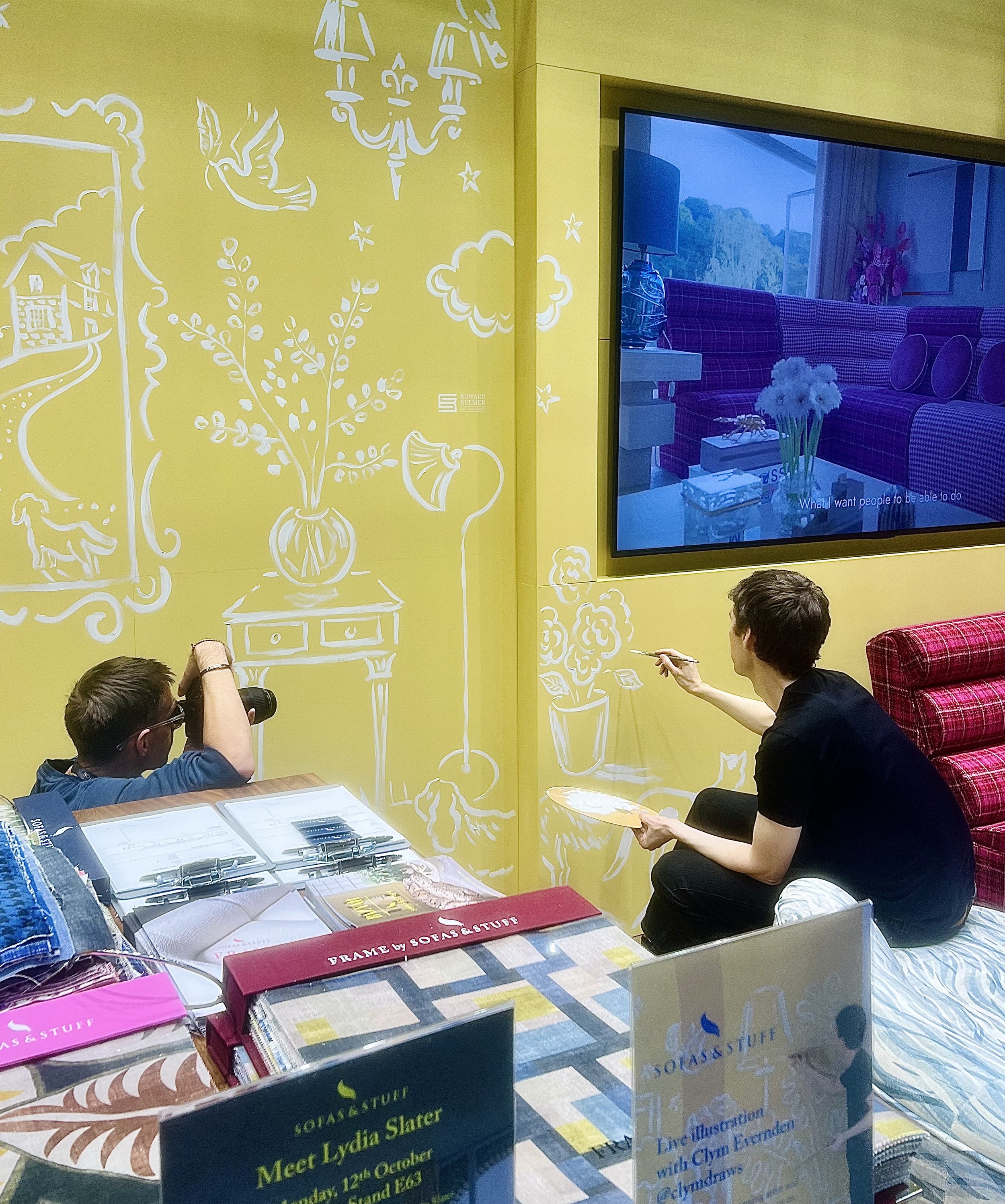
Clym Everden brings the walls of Sofa & Stuff’s stand to life, live at Decorex 2026
Time is the ultimate value
Let’s dwell for a moment on time - the very thing we all seem to have so little of. We often say that time is the ultimate luxury, and there has never been more truth in that.
In luxury, time is an intrinsic part of the value rather than a cost to be minimised. The time invested in a product is precisely what makes it desirable. The customer expects a slower pace, knowing that details are being perfected and the work is passing through expert hands - crafted properly, without haste.
AI, conversely, is a ‘time compressor’. It can draft, summarise, organise, repurpose, and systemise, lightning fast. Used thoughtfully, it reduces the admin load that steals energy from the work only people can do.
But for premium brands, the goal must never be efficiency-first. If you choose to use AI, it has to be brand-first - protecting standards and discernment, always. If you prioritise speed over care, the real danger is that AI simply makes you faster at being average.
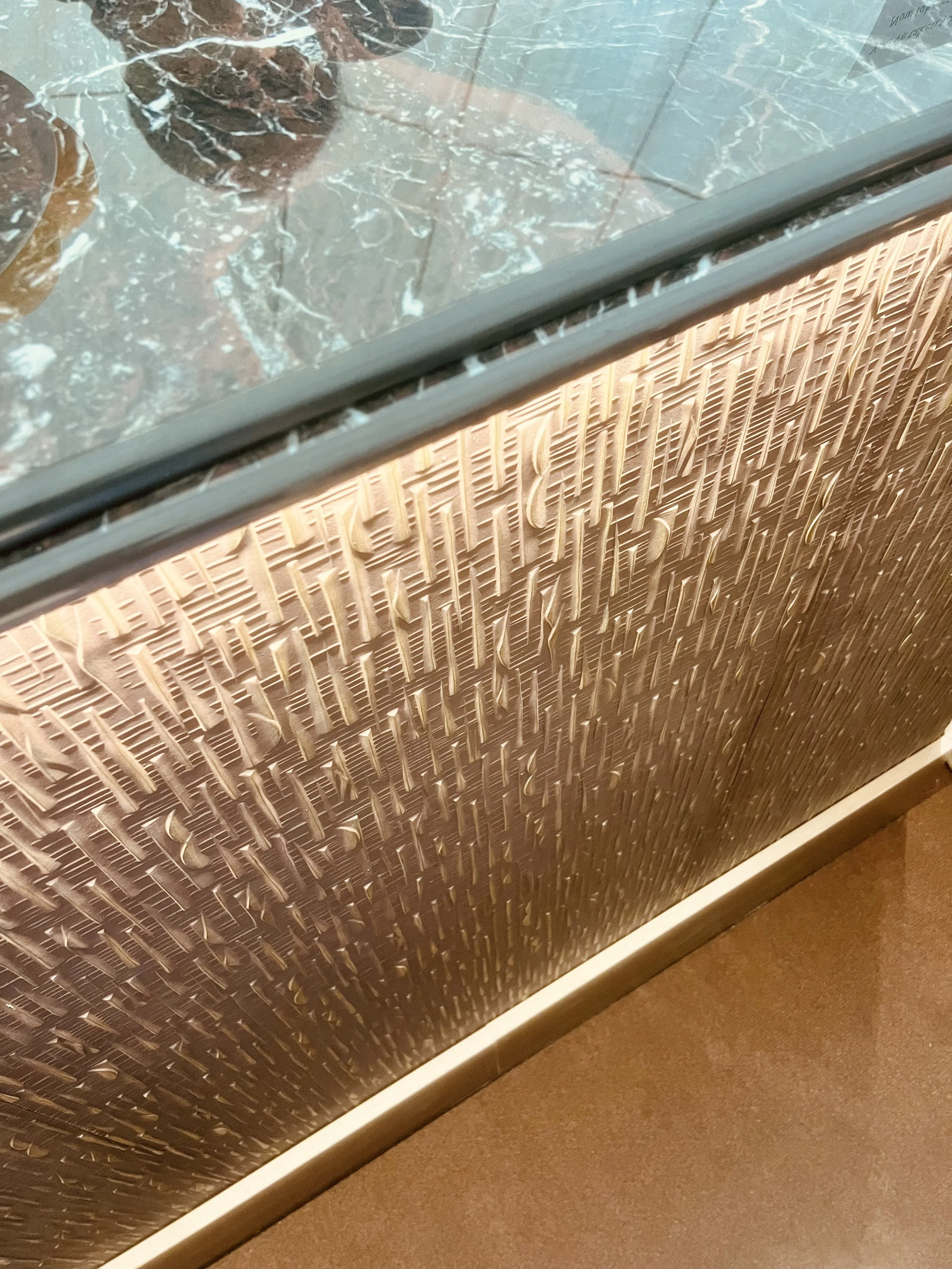
The Decorex bar featuring ‘Caprice’ wallcovering by Lincrusta painted in Argile Peinture with bronze metallic highlights
Quality has to speak first (especially when building heritage)
Heritage is a powerful asset, but it’s not the only route to luxury.
One of the panel pointed out that if you’re newer (and ‘new’ can still mean decades established), quality has to do the heavy lifting before history can. Scarcity and skill have to speak first.
We’re moving into a world where claims are cheap. Anyone can say “handcrafted”, “timeless”, “considered”, “sustainable”, “luxury” without the proof to back it up.
Proof lives in the product itself, and equally in how you show your work:
The details you choose to photograph and film
The language you use to describe materials and process
The service experience you design
The partners and third parties who validate you
The consistency of your voice and style over time
AI search and human search have something in common: both are trying to work out who means what they say.
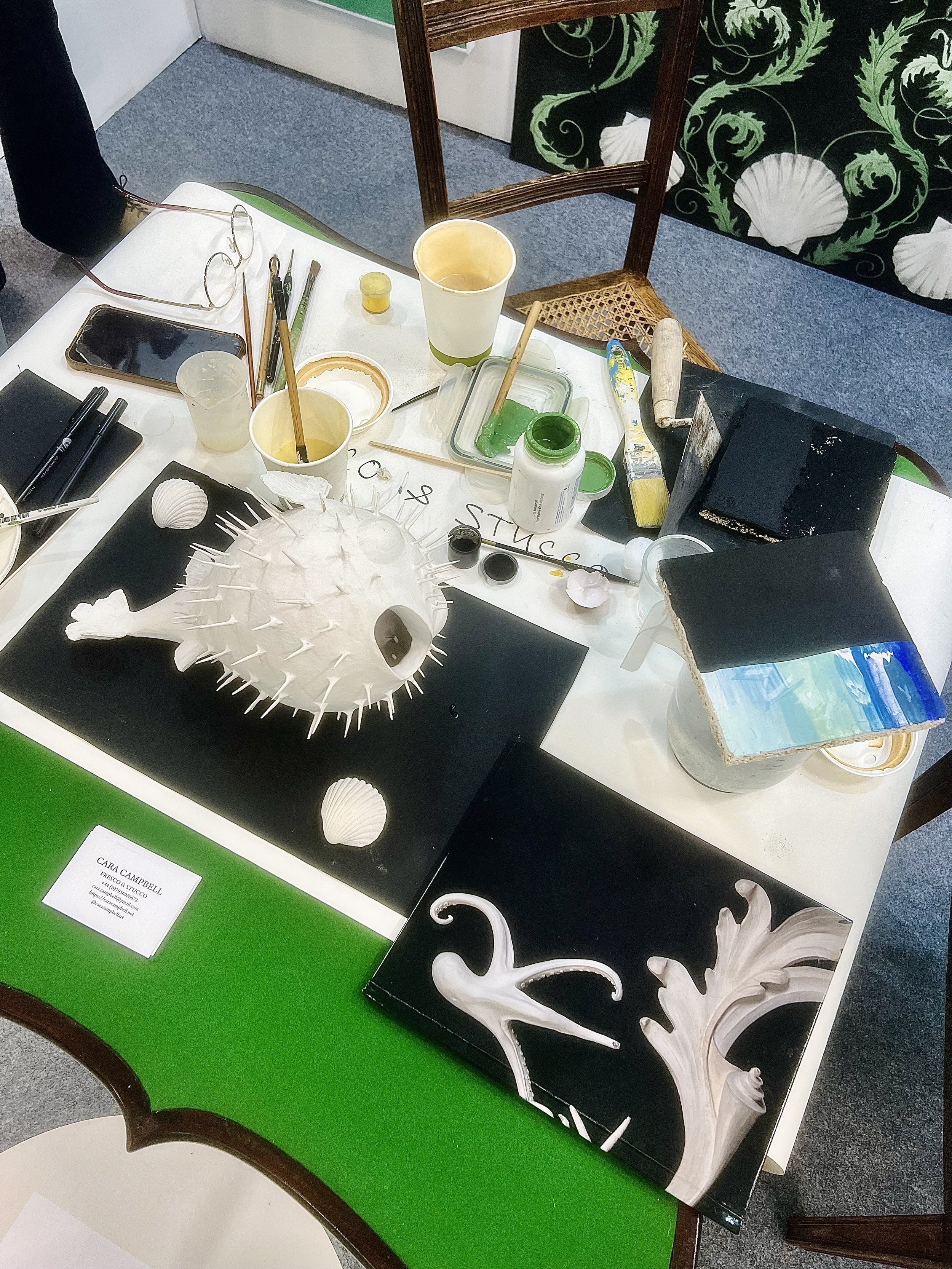
The world of Cara Campbell, fresco artist, brought to Decorex 2026 Making Spaces
Luxury is doing it well
Ben Saltmer, Lifestyle Design at Bentley, reminded us that luxury design goes far beyond slapping a badge on a product.
Bentley is 107 years old with craft as integral to their process as ever. They protect skills heading towards extinction, even working with local education providers in Crewe to keep these crafts alive. This is brand guardianship in its truest sense, and an example for any brand trying to navigate modern pressures.
Luxury is doing it well: crafting everything beautifully, whether your expression is quiet or maximal. And yes, being fussy is part of the job description.
When AI makes it easy to produce “good enough”, fussiness (i.e. caring enough to say “not good enough for us”) becomes a competitive advantage.
Collaborations work but only when values align
The panel also touched on partnerships and collaborations which can introduce you to new audiences and bring fresh relevance, provided your values align.
Frederick Fischer spoke about external artists like Zaha Hadid and Damien Hirst who have helped the Lalique brand evolve through the times, alongside in‑house legacy design.
Tim Butcher described collaborations at Fromental as something that often begins in real life: a conversation over coffee that sparks an idea that simply “has to happen”. Chemistry and shared principles come first.
The same thinking applies to how we choose our tools. If you’re going to work with AI, treat it like you would a collaborator. Choose carefully - a tool only earns its place if it aligns with your principles; anything less compromises your standards.
Because your name is on everything you put into the world.
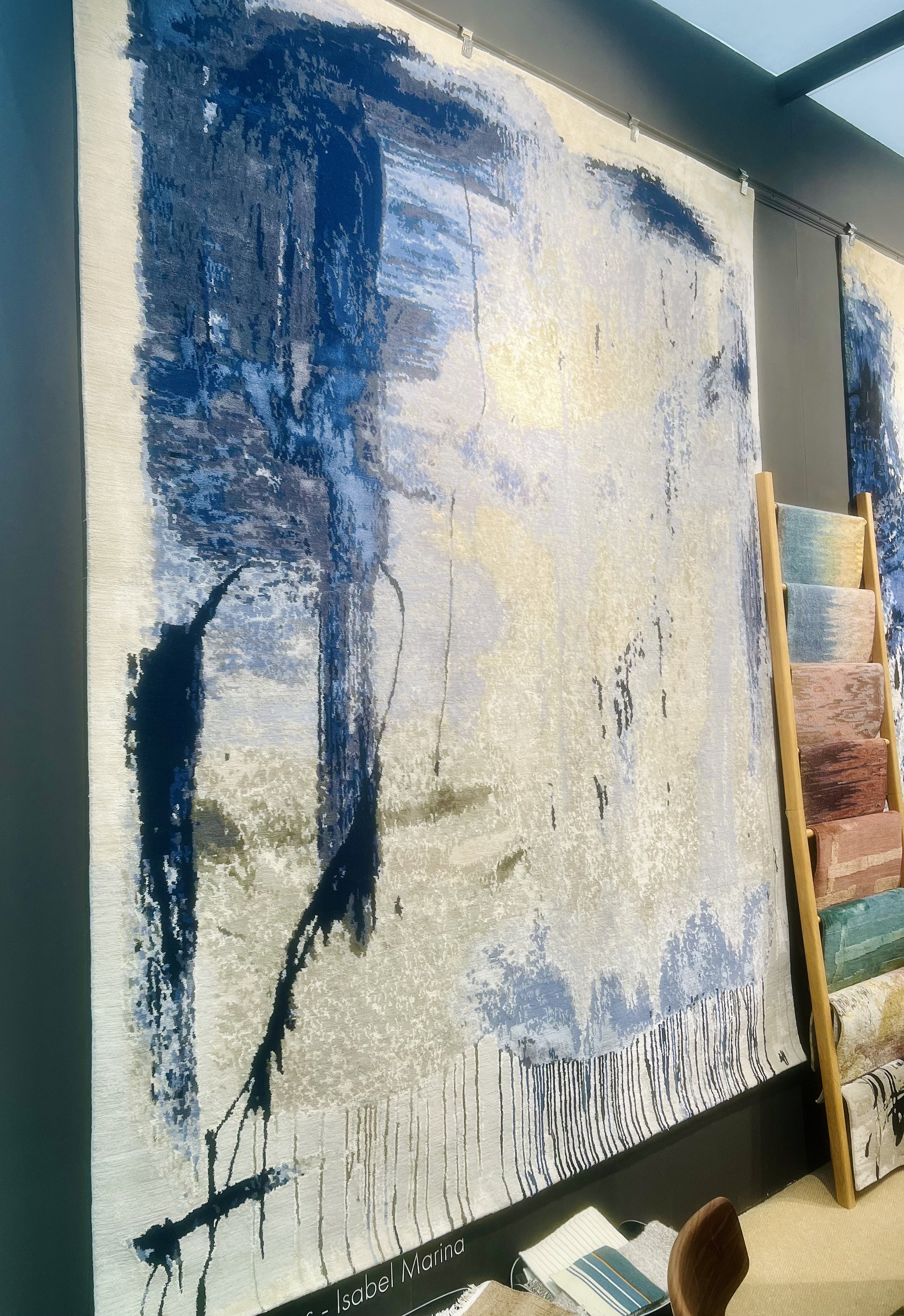
Knots Rugs collaboration with Isabel Marina making art for the floor
Social media is just one touchpoint
A final, vital takeaway from the panel: social media is just one of many touchpoints to reach and connect with your customer but it often receives an over-focus.
Followers and engagement counts can be deceptive, especially for premium brands. Luxury decision-making is nuanced and deliberate; it, also, takes time.
While social platforms can establish a mood and offer glimpses into a world, they rarely tell the whole story, and they cannot carry the weight of brand building alone.
In an AI search world, social is just one part of a wider discovery process. Customers, and the AI tools researching on their behalf, gather context and proof from multiple places (on and offline) before making a decision.
The work lies in understanding your customer deeply rather than exhausting energy on algorithmic trends, meeting them wherever they seek to be inspired with discretion and understated care.
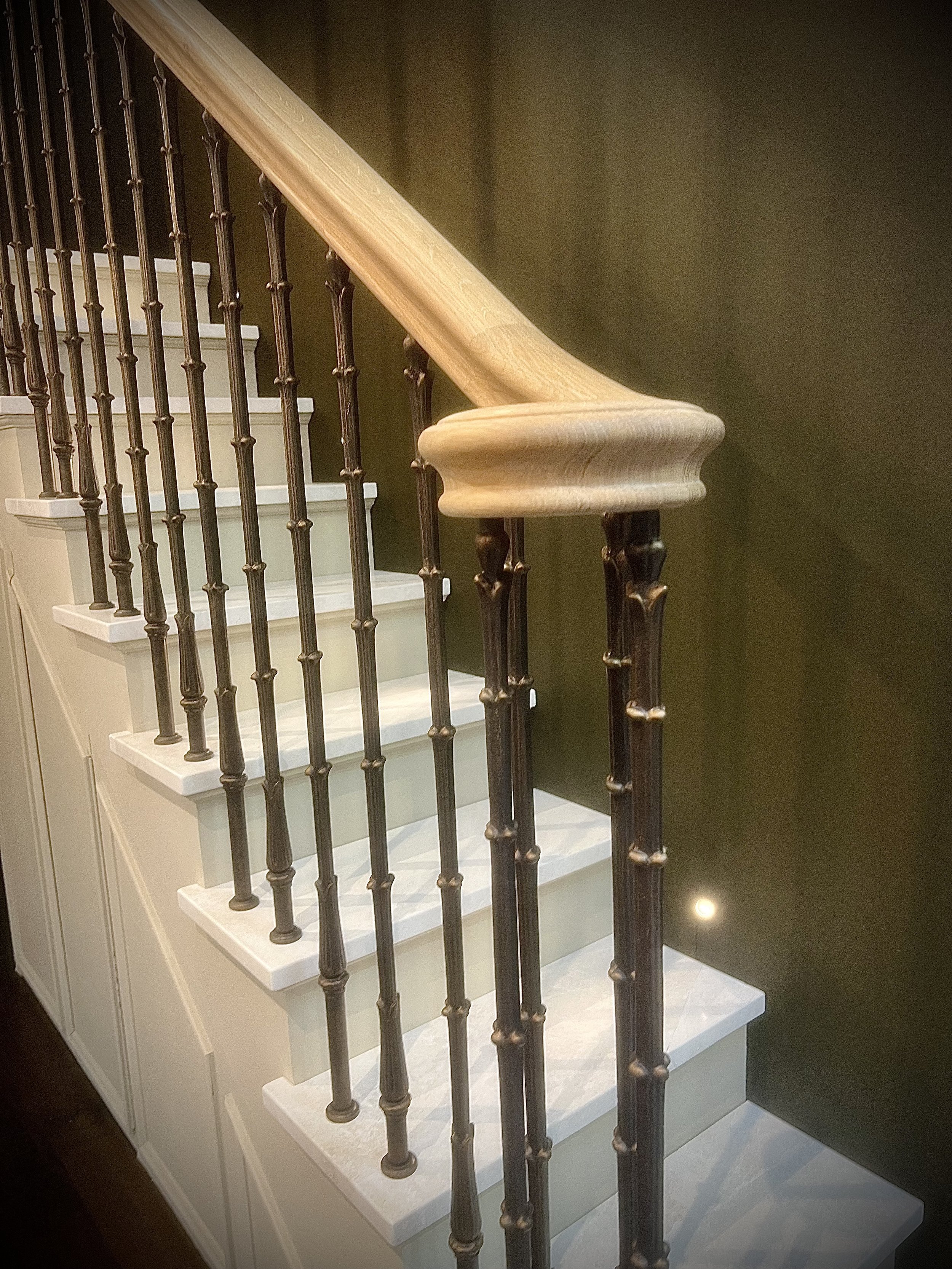
Thomas Brenton’s Montague Spindle - understated craft and care at Decorex 2026
The question we should ask ourselves
Tim Butcher raised a question every luxury brand should consider:
How do we do justice to ourselves?
You can’t answer that without first knowing, with absolute clarity, who you are, who you’re for and what you are trying to say, then using that knowledge as the foundation for everything you build.
It means understanding your own value rather than bending to what the algorithm demands. You are making cashmere that lasts rather than a cotton t-shirt designed for a passing trend.
As tools accelerate, luxury brands get it right by protecting what shouldn’t be sped up. Systemising what they can to allow more time for care, and keeping the creative work front and centre as fuel for you and your people.
Handle with care
Decorex was a timely reminder that the best luxury brands don’t rush to every new trend and tool the moment they appear. They protect the elements that carry meaning: judgement, taste, craft, service, and a commitment to doing things properly over time.
Listening to Frederick Fischer, Ben Saltmer and Tim Butcher, you could feel how consistent their principles are, even when the products and worlds look different. The tools will keep changing. The pressure to move faster won’t let up. But the brands that last are the ones that know what must stay in the skilled hands of their people and what must be handled with care.
